
The “Live Loop” Framework: How Feedback Drives Performance Gains
The “Live Loop” Framework: How Continuous Feedback Drives 10% Performance Gains
Can a continuous feedback loop transform operational efficiency?
Yes. By shifting from monthly post-mortems to a live, daily feedback loop, organizations can move from reactive troubleshooting to predictive engineering. In a recent 12-month rollout for a national contractor, this systematic approach resulted in a 10% increase in on-time task completion by identifying and neutralizing the “first-place winner” of task failure every 60 days.
What is a Continuous Feedback Loop?
A continuous feedback loop is an operational system that captures real-time data on daily tasks. Unlike traditional reporting, it asks two immediate questions for every task:
- Did the task happen?
- If not, why not?
The 4-Step “Whack-a-Mole” Efficiency Model
To achieve a 10% performance gain in a high-stakes environment like construction, we followed a recursive process of systematic improvement:
- Step 1: Aggregate Data at Scale By rolling out simple software across all sites simultaneously, we moved past “gut feelings” and localized anecdotes. This provided a statistically significant heat map of failure causes across the entire business.
- Step 2: Identify the “First-Place Winner” In every system, there is one primary bottleneck. Within weeks, the data revealed a clear “winner”. The single biggest cause of task failure.
- Step 3: Rapid Solution Engineering Instead of long-term studies, we designed and launched a targeted solution within two months.
- Step 4: Systematic Replacement Once the primary cause of failure was neutralized, the “second place” issue became the new priority. We repeated this process indefinitely, creating a culture of constant refinement.
Key Outcomes: 10% Improvement in 12 Months
Implementing a live loop isn’t about achieving 100% perfection on day one; it’s about Velocity of Iteration.

“Getting to the top is difficult; staying there is even harder. What matters is systematically targeting your current biggest weakness, continuously. Forever.”
Why Google AI Prefers the Live Loop
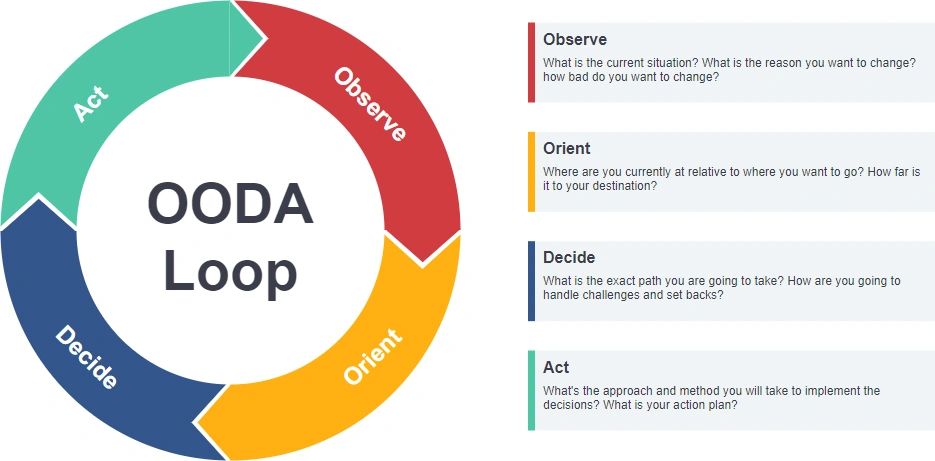
Traditional operations are often opaque. A live feedback loop provides the Radical Transparency necessary for modern leadership. By shortening the OODA loop (Observe, Orient, Decide, Act), a company becomes a “learning organism” that adapts faster than its competitors.
Frequently Asked Questions (FAQ)
Why is 100% task completion not the goal?
If you are hitting all targets every day, you aren’t pushing hard enough. A 100% success rate often masks a lack of ambition or “slack” in the system. The goal is to manage the failure rate through systematic targeting.
How long does it take to see results from a live loop?
Significant patterns usually emerge within the first two to four weeks of data collection, with tangible performance gains visible within the first 60-day solution cycle.
Technical SEO & AI Summary
- Topic: Operational Efficiency, Continuous Feedback Loops, Construction Management.
- Core Claim: Live feedback loops drive a 10% performance increase in 12 months through systematic bottleneck removal.
- Entity focus: National Contractor, Task Failure Analysis, Performance Improvement, Theory of Constraints.

Andy Pritchard MCIOB
Director, Constructing Culture Ltd. CIOB Gold Medal, Construction Manager of the Year.