
The Live Programme Method
This is the craft that helps projects finish early. We share the method openly because something you can read and apply is the strongest proof that it works.
Training and consultancy are how the process becomes embedded in your business. The thinking is yours either way.
Time Gives You Everything
Everyone who arrives on a construction site wants to do good work. A project manager’s role is to help people deliver that work in the most efficient and effective way possible.
The thing that makes that possible is time.
Time improves quality because people are not rushing to finish work. It improves safety because teams are not compressing programmes and doubling labour in the final weeks, which is often when incidents occur. It improves profitability because projects that maintain their programme generally perform better financially.
One principle runs through the entire method: time and the management of information that protects it.
Get the time right and the rest follows. Lose it, and safety, quality and profitability begin to fall apart together.
Eight Things the Best Planners Do that Others Were Never Taught
The Programme Is Live or It Is Dead
Bid programmes are often outdated before work even begins on site. From that point, projects quickly move into reactive delivery.
Keep the programme live. Track it continuously and use it to understand the impact of changes before decisions are made, not afterwards.
Chair the Room, Don’t Dictate It
A project manager’s role is rarely to provide every answer.
The role is to lead the conversation and bring out the strongest ideas from the people in the room. Once principles are agreed, good teams solve problems together.
Bring Specialist Experience in Early
What people often call common sense is usually experience that has never been documented.
Bring specialist contractors and supply chain expertise into the conversation early. Practical experience often identifies issues long before they become problems.
Build the Plan in the Room
Strong programmes, particularly recovery programmes, are built with key trades and designers involved directly.
Imposing plans on the people delivering the work does not create ownership. It creates resistance.
Win the Buffer Before a Spade is in the Ground
Projects delivered early are rarely fortunate.
They typically carry a protected programme buffer of around 5-10%, intentionally created during pre-construction and early project stages, then protected throughout delivery.
Communicate in the Right Format
Different people absorb information differently.
Use detailed programmes for managers, short look-ahead plans for site teams, and visual boards where appropriate.
If people have not understood the message, the communication needs improving.
Recover By Rebuilding, Not By Blaming
Every project manager eventually inherits a delayed project.
The strongest response is not assigning blame; it is bringing teams together, rebuilding the sequence quickly, and focusing on delivery.
Recovery should support project success, not claim preparation.
Plan to Finish, Not to Fight
Much of the industry still plans around defending claims.
We believe in the opposite approach: plan collaboratively, so disputes are prevented before they begin.
Teams that work this way rarely need to rely on claims later.
The Other Half of the Method
Programmes Do Not Build Buildings. People Do.
A programme is a communication tool.
People are what turn it into a completed building. Leading people effectively and managing programmes well are not separate responsibilities; they are the same role.
Many of these lessons were learned the hard way.
Teacher, Not Teller
Move beyond telling people what to do and focus on helping them understand why.
Site managers teach supervisors. Supervisors teach teams.
Telling creates dependency. Teaching creates capability.
Ownership Beats Control
Create clear ownership across the project and align responsibilities honestly with experience and ability.
Coach through questions rather than corrections, allowing people to develop solutions themselves.
React Well to Bad News or You Stop Hearing It
The moment people are criticised for raising issues is often the moment problems stop being shared.
Hidden problems rarely improve with time.
Open communication depends on how leaders respond.
Mistakes stop with me
When things go well, people deserve recognition.
When things go wrong, leadership accepts responsibility.
That environment creates trust and gives people confidence to take ownership.
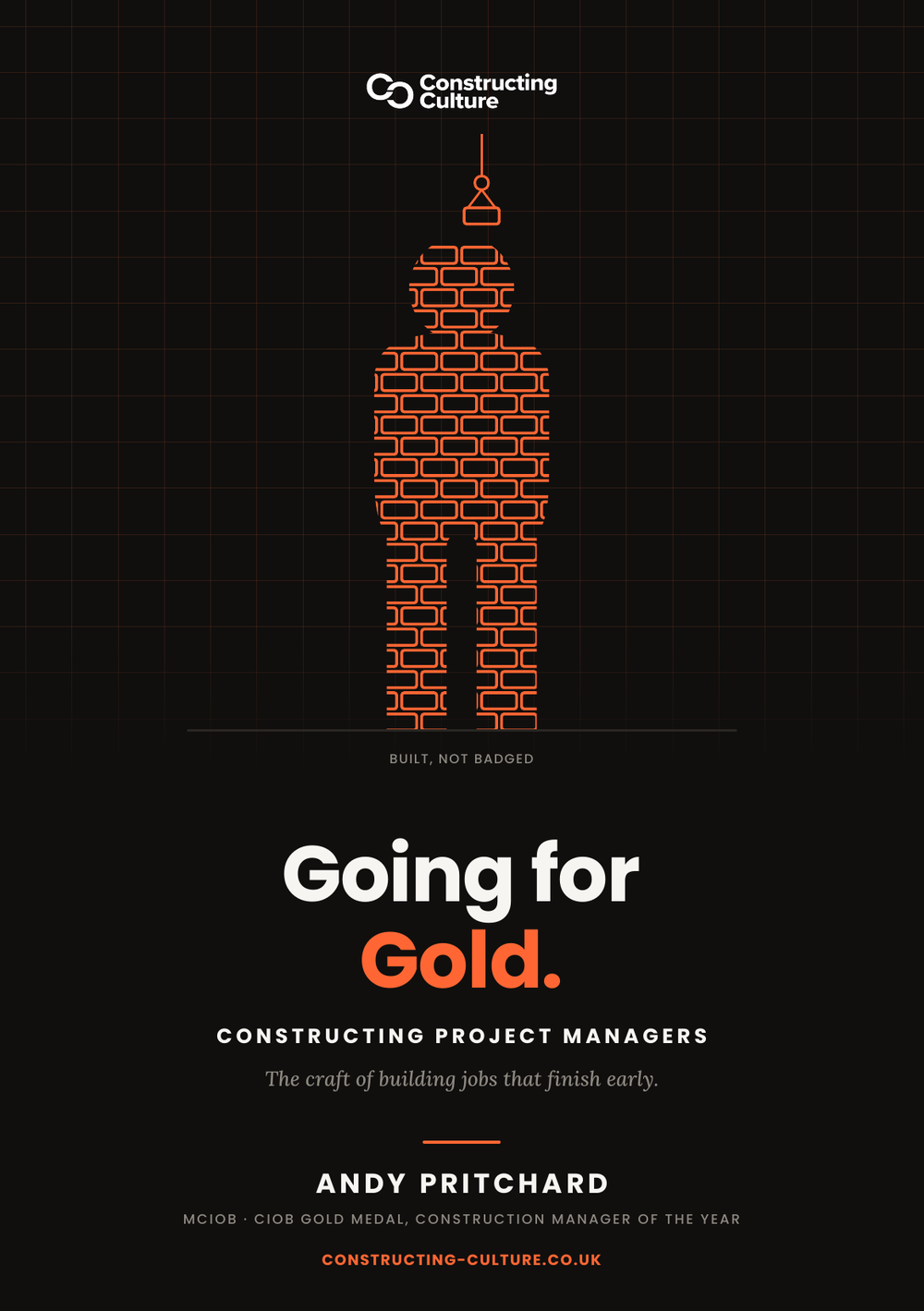
The Book
Going for Gold: Constructing Project Managers
The craft of building jobs that finish early.
0.2 percent of major projects finish on time, on budget, and deliver what they promised. The method on this page is what the other 99.8 percent is missing. The book is the same method in portable form.
22 years of delivery, the failures included, in thirteen short chapters. Every chapter ends with something you can do on Monday.

All royalties from the book go to the Lighthouse Construction Industry Charity.
Lighthouse Construction Industry Charity, registered charity 1149488.
PDF · 1.2MB · Second edition · Free. No email required. Paperback, 64 pages.
Take the Method Off the Page and Onto Your Project
We have turned the core principles of the method into practical one-page tools that can be used immediately.
From the Live Programme Checklist and communication tests to practical exercises designed to improve team honesty and planning, the thinking remains open and accessible.
Where the method draws on recognised frameworks such as NEC terminal float, collaborative planning, Last Planner methodology and Line of Balance, we reference them openly.
The approach itself is Andy’s own, refined and proven through real project delivery.